Data Center TES Engineering Collaboration
Your System Requirements. Our Manufacturing Expertise.
Hess Services works with project engineering teams to turn your TES designs into practical, manufacturable tanks and vessels.
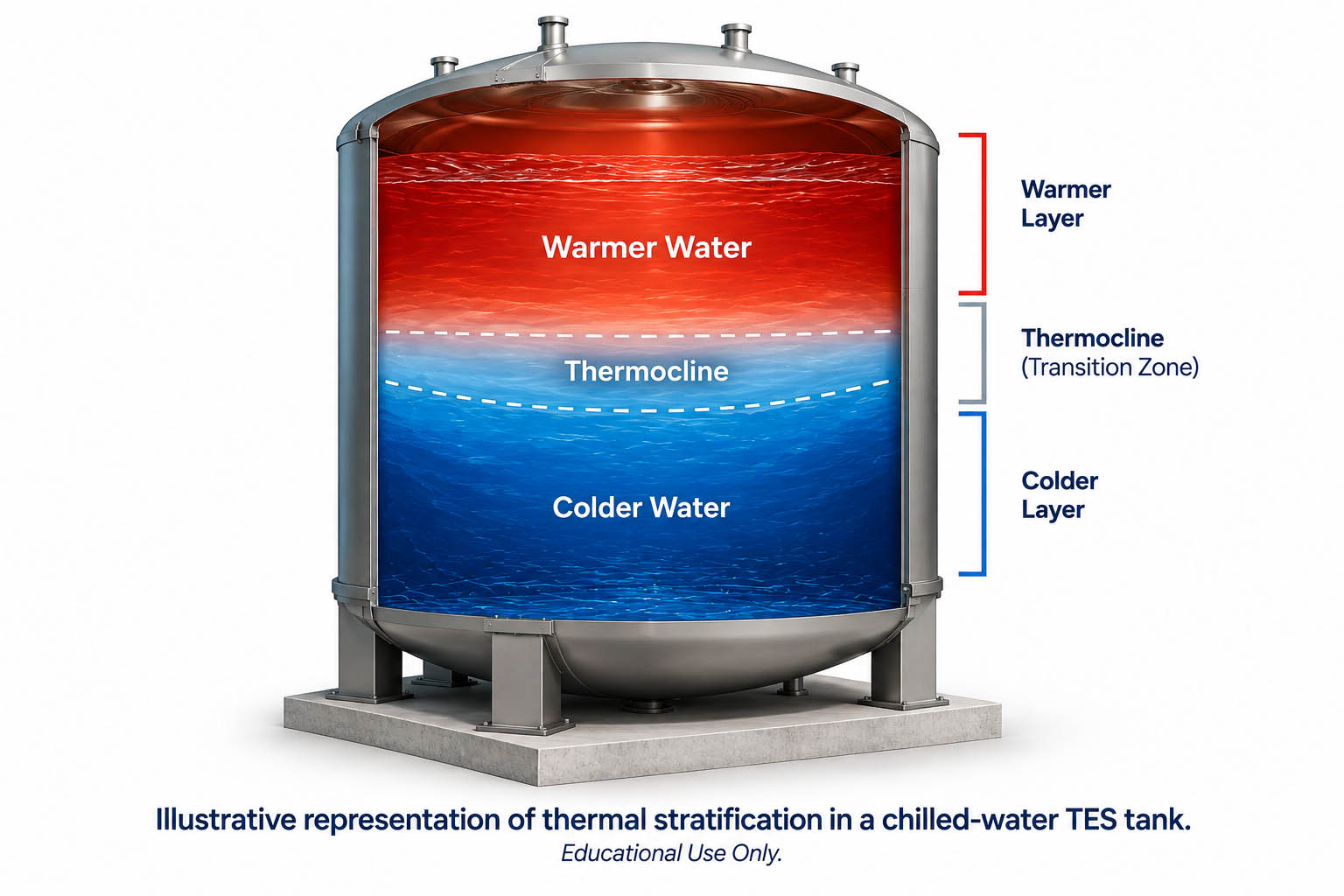
Your Engineering Team Defines the TES System
The thermal and hydraulic design of a chilled-water TES system must be established by the project’s engineering team. Hess does not replace the system engineer or process designer.
Your engineering team establishes the requirements needed to achieve the intended system performance, which may include:
- Required thermal storage capacity
- Tank or vessel volume and dimensions
- Operating pressure and temperature
- Flow rates and operating conditions
- Thermal performance requirements
- Inlet and outlet configuration
- Nozzle locations, sizes, and configurations
- Baffles, diffusers, and other internal components
- Insulation and external jacketing
- Applicable project specifications
- CFD modeling and analysis where required
- Inspection and testing requirements
- Transportation and installation considerations
These requirements define what the TES tank or vessel must accomplish within the overall cooling system. Hess uses those requirements as the basis for vessel development and manufacturing.
What Hess Brings to the Project
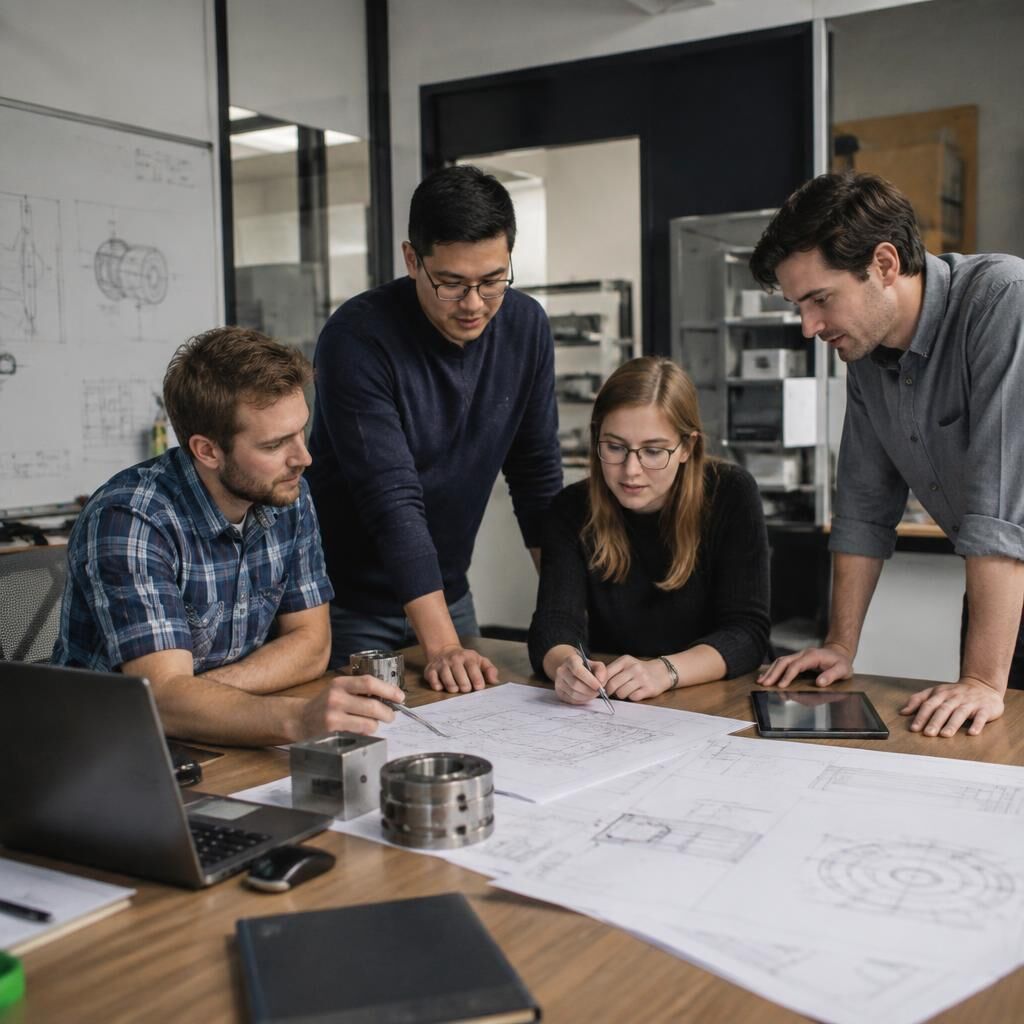
Once the system requirements and vessel performance requirements are established, Hess applies its tank and vessel engineering, applicable code, fabrication, and manufacturing expertise to develop a vessel that can be produced efficiently and consistently.
Hess’s role can include:
- Tank and pressure-vessel engineering
- Applicable ASME requirements and construction specifications
- Material selection and thickness requirements based on the project specifications
- Vessel geometry and component configuration
- Nozzle and manway construction
- Welded-joint and fabrication details
- Fabrication tolerances
- Welding requirements
- Inspection and NDE requirements
- Manufacturing sequence
- Tooling and production setup
- Material handling
- Assembly and fit-up considerations
- Transportation and handling requirements
- Repeatability and production efficiency
- QA/QC and project documentation
Hess’s role is not simply to build the vessel exactly as drawn. Our engineering and manufacturing teams can identify opportunities to make the design more practical and economical to fabricate while maintaining the project’s functional and specification requirements.
Design for Manufacturability
For projects involving multiple similar TES tanks or vessels, small fabrication decisions can have a significant effect on total project cost and production time. A detail that adds an hour to one vessel can become a substantial production burden when repeated across dozens or hundreds of units.
Hess can work with your engineering team before the design is finalized to evaluate opportunities such as:
- Standardizing vessel configurations where practical
- Reducing unnecessary fabrication steps
- Designing around established tooling and equipment
- Improving weld accessibility
- Simplifying repetitive operations
- Component orientation
- Material handling
- Fabrication sequence
- Setup and changeover time
- Inspection accessibility
- Repeatability from one vessel to the next
The objective is not simply to create a vessel that can be built. The objective is to create a vessel that can be built efficiently, consistently, and repeatedly.
From Engineering Requirements to Production
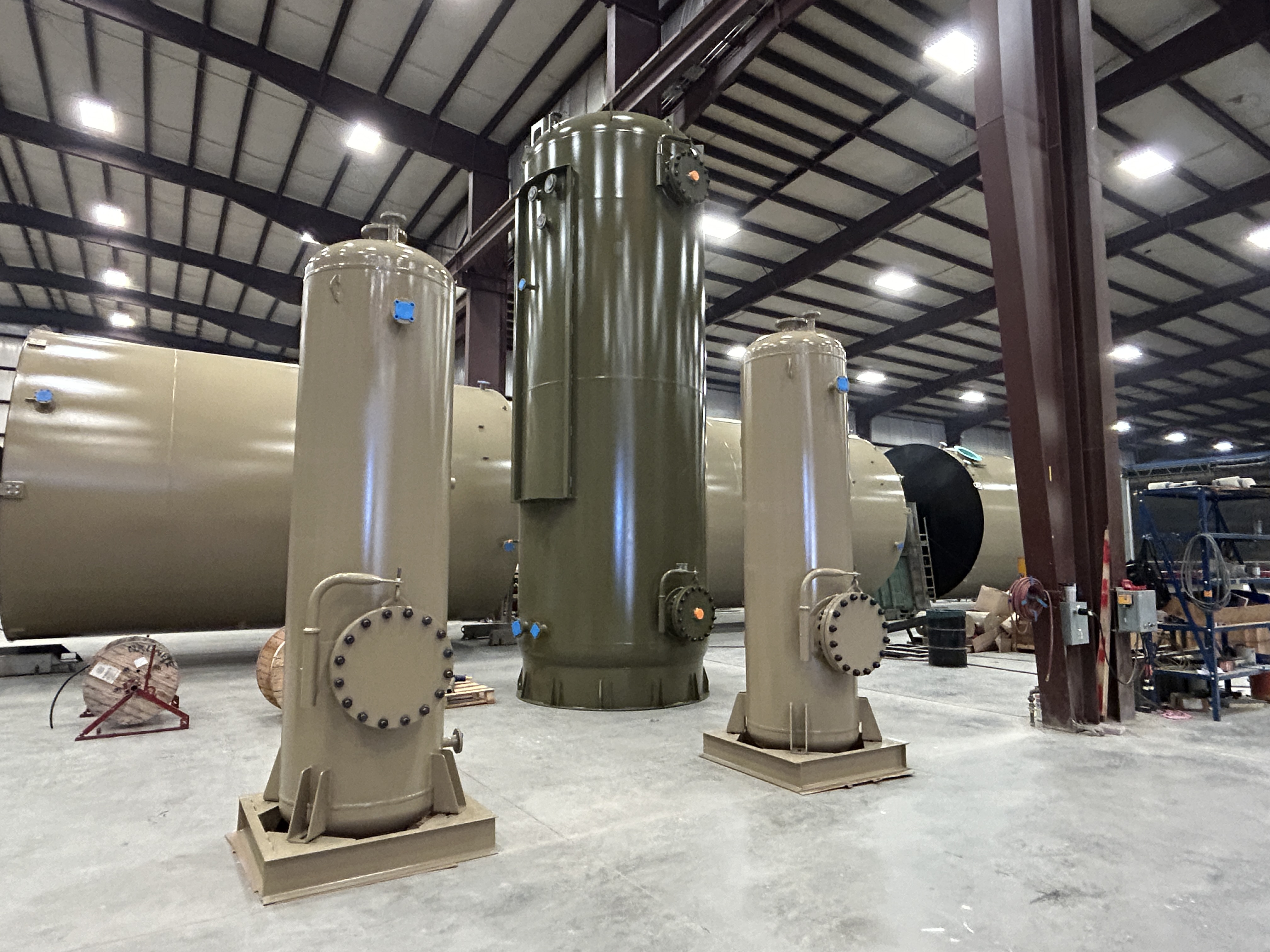
Once the vessel design is established, Hess can move from engineering collaboration into production-scale manufacturing. Our manufacturing approach is designed to maintain consistency across multiple units while supporting the quality, inspection, documentation, and schedule requirements of the project.
Then a concise list:
- Multiple vessels and repeat production runs
- Standardized or similar vessel configurations
- 6′ and 8′ diameter production capabilities
- Larger-diameter and heavier vessels up to 15’6″
- Tanks built up to 16′ OD
- Vessel lengths up to 120′ seam-to-seam
- Vessels weighing nearly 100,000 lbs.
- Robotic and semi-automated welding
- Highly tooled assembly systems
- QA/QC, inspection, testing and NDE
- Specialized vessel transportation
Large diameter is one of our capabilities. Production is our approach.
What to Bring to the Initial Discussion
The earlier Hess is involved, the more opportunity there is to identify manufacturing efficiencies before the vessel design is finalized. Preliminary information is enough to begin the conversation.
Useful project information may include:
- Preliminary vessel drawings or mechanical description
- Required storage capacity
- Quantities and production schedule
- Operating pressure and temperature
- Vessel dimensions or dimensional constraints
- Nozzle and connection requirements
- Internal component requirements
- Materials and applicable specifications
- Applicable ASME or other construction requirements
- Inspection and testing requirements
- Insulation/coating requirements
- Transportation and installation considerations
- Engineering contacts for technical coordination
A preliminary drawing, specification, or mechanical description can give the Hess team a starting point for evaluating the vessel from a fabrication and production perspective.
Your Engineering Team. Our Manufacturing Expertise.
The most effective TES projects establish a clear division of responsibility while allowing the engineering and manufacturing teams to collaborate early. Your project engineers define the thermal and hydraulic requirements and approve the vessel’s intended function. Hess applies its vessel engineering, fabrication, code, and manufacturing expertise to help turn those requirements into a practical production-ready vessel.
Whether the project involves a single large TES vessel or a production program requiring multiple similar tanks, early collaboration can help reduce fabrication costs, improve production efficiency, and increase repeatability from one vessel to the next.
Have a data center TES vessel in development? Share your preliminary drawings, mechanical description, project specifications, quantities, schedule, or engineering contacts with the Hess team.
We’ll work with your engineering team to evaluate the vessel from a fabrication, manufacturability, and production perspective.