Design for Manufacturability for TES Tanks & Vessels
Designing the Vessel for Efficient, Repeatable Production
The design of a TES tank or vessel affects more than its performance in the cooling system. Vessel geometry, component configuration, fabrication sequence, welding, tooling, inspection, and material handling can all affect how efficiently the equipment can be manufactured.
Hess applies decades of tank and vessel fabrication experience to identify practical design-for-manufacturing opportunities before production begins.
Small Design Decisions Can Become Large Production Costs
A design detail that adds only a small amount of fabrication time to one vessel can become a significant cost and schedule factor when repeated across a large production program.
For projects requiring multiple TES tanks or vessels with the same or similar configurations, manufacturing efficiency becomes increasingly important.
Design-for-manufacturability considers not only whether a vessel can be fabricated, but how efficiently that design can move through the manufacturing process.
This can affect:
- Fabrication time
- Welding time
- Assembly and fit-up
- Material handling
- Tooling and setup
- Inspection
- Finishing
- Production scheduling
- Repeatability from one vessel to the next
Vessel Geometry, Components & Fabrication Sequence
Vessel Geometry
- Shell diameter and length
- Component placement
- Access and manway locations
- Nozzle arrangement
- Internal component configuration
Weld & Assembly Access
- Accessibility for welding
- Fit-up and assembly
- Positioning of components
- Minimizing difficult or repetitive fabrication operations
Fabrication Sequence
- Order of assembly
- Material movement
- Welding sequence
- Handling between operations
- Access for inspection and testing
Bring Hess Into the Design Early
The earlier Hess is involved in the vessel development process, the greater the opportunity to identify design-for-manufacturing improvements before the design is finalized.
Your project engineering team establishes the TES system requirements and vessel design. Hess can then review the proposed tank or vessel from a fabrication and production perspective and identify opportunities to simplify manufacturing without changing the intended function of the equipment.
This may include evaluating:
- Fabrication sequence
- Weld accessibility
- Component orientation
- Assembly and fit-up
- Tooling and setup requirements
- Material handling
- Inspection accessibility
- Repetitive fabrication operations
- Production setup and changeover
- Standardization of similar configurations
The objective is not to redesign the TES system. The objective is to help ensure that the vessel designed for the system can also be manufactured efficiently and consistently.
Design for Repeatability
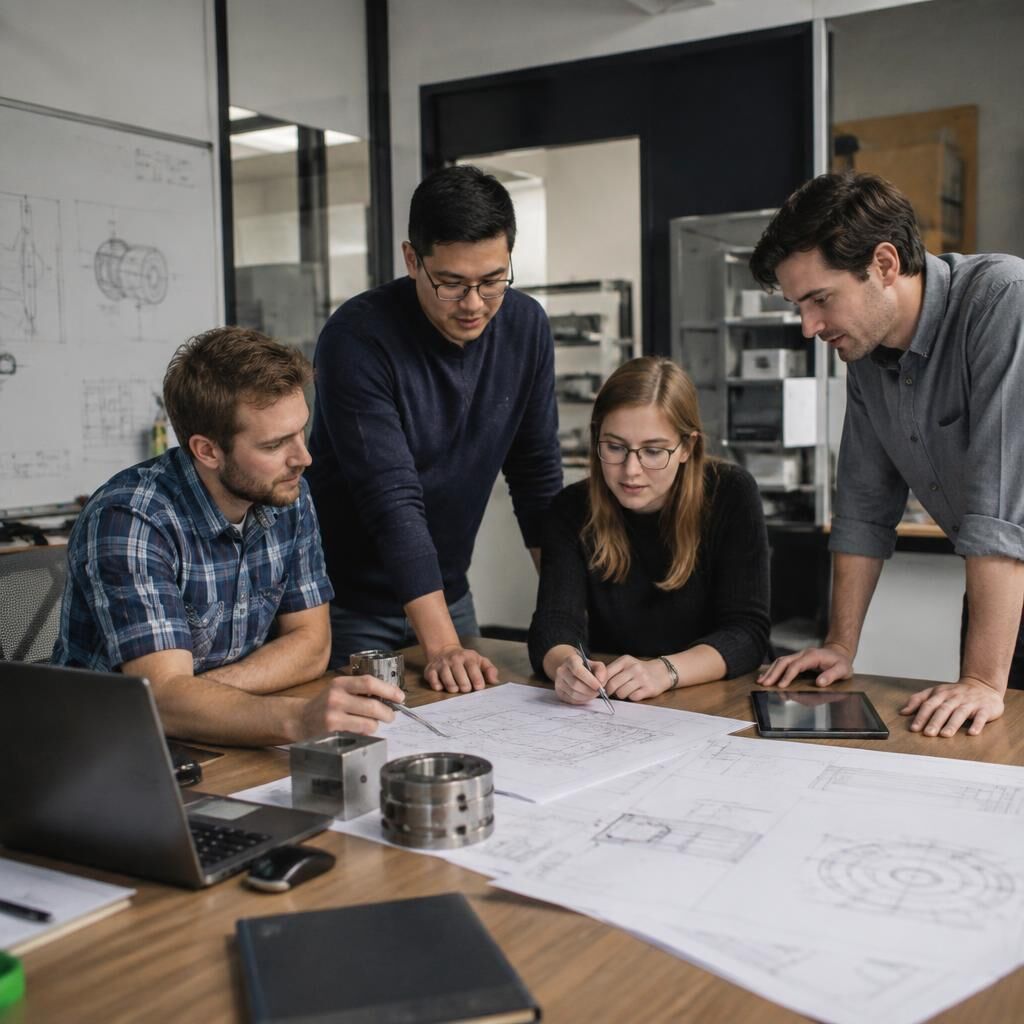
For a project involving multiple similar TES tanks or vessels, the first vessel establishes more than just a finished piece of equipment. It establishes the fabrication process that may be repeated throughout the production run.
Standardizing configurations where practical can reduce setup time, simplify fabrication, improve material handling, and make repetitive operations more predictable.
Hess can work with your engineering team to evaluate opportunities such as:
- Standardizing vessel configurations where practical
- Reducing unnecessary fabrication steps
- Designing around established tooling and equipment
- Improving weld accessibility
- Simplifying repetitive operations
- Standardizing component orientation
- Improving material handling
- Simplifying fabrication sequence
- Reducing setup and changeover time
- Improving inspection accessibility
- Increasing consistency from one vessel to the next
The objective is not simply to create a vessel that can be built. The objective is to create a vessel that can be built efficiently, consistently, and repeatedly.
From Design to Production
Design for manufacturability is most valuable when it results in a production process that is efficient, consistent, and repeatable.
Hess is equipped to manufacture multiple vessels of the same or similar configuration using established tooling, equipment, fabrication processes, and inspection procedures.
Our production-oriented approach is suited to projects ranging from smaller and mid-sized repeat runs to large-diameter tanks and vessels.
Large diameter is one of our capabilities. Production is our approach.
Built for Production — From Smaller Repeat Runs to Large-Diameter Vessels
Hess is equipped to manufacture a broad range of ASME vessels and welded tanks.
Our production capabilities make us a strong fit for projects requiring multiple units of the same or similar configuration, whether those vessels are relatively small, mid-sized, or large.
At the same time, Hess has the equipment and manufacturing experience to produce large-diameter tanks and vessels that may be outside the practical range of many general fabrication shops.
This combination allows Hess to support projects such as:
- High-volume repeat vessel production
- Multiple-unit tank programs
- Standardized equipment packages
- Cooling and thermal-storage systems
- Large-diameter storage tanks
- Large-diameter pressure vessels
- Multi-vessel projects
- Long-term production programs
Bring Hess Services Into the Project Early
Planning a data center project requiring thermal storage tanks, chilled-water vessels, ASME pressure vessels, or other large welded tanks?
Bring Hess into the project early. Share your preliminary vessel requirements, quantities, schedule, applicable specifications, drawings, or engineering contacts with our team so we can evaluate the manufacturing requirements and identify opportunities to optimize the design for production.